
Trauma vs. Neurodivergence? This is a question that is asked frequently due to the overlap of in experiences. The answer isn’t black and white though. Because of the similarities, it can be difficult to understand the origin of the symptoms one might be experiencing.
Many experiences associated with trauma and neurodivergence look remarkably similar on the surface. Emotional overwhelm, executive functioning difficulties, social exhaustion, anxiety, sensory sensitivities, and burnout can all occur in both.
Yet beneath those outward experiences, the underlying mechanisms can be very different.
Understanding those differences isn’t about putting yourself into a box. Instead, it can help you make sense of your experiences, identify what kinds of support may be most helpful, and begin treating yourself with more compassion.
Why Trauma and Neurodivergence Are So Easy to Confuse
Trauma and neurodivergence both influence the brain, nervous system, emotions, relationships, and daily functioning. Because they affect many of the same areas of life, they produce similar outward behaviors.
For example, someone may:
- struggle to start tasks
- avoid social situations
- become overwhelmed easily
- forget important information
- experience emotional outbursts
- have difficulty trusting others
- feel exhausted after everyday activities
From the outside, these experiences can look nearly identical. But the reasons behind them may be completely different.
A Helpful Way to Think About It
One way to understand the difference is to think about two interconnected systems.
Your Brain 🧠
Your brain determines how you process information.
This includes things like:
- attention
- executive functioning
- sensory processing
- communication
- learning style
- emotional processing
Neurodivergence represents natural differences in how these systems developed.
Your Nervous System 🌱
Your nervous system is constantly asking one question:
“Am I safe?”
Its primary responsibility is protection.
When someone experiences trauma, the nervous system learns patterns that helped them survive overwhelming experiences.
Even long after those experiences have ended, the nervous system may continue responding as though danger is nearby.
These two systems constantly influence one another.
Understanding both helps explain why two people may appear to struggle with the same issue while needing very different kinds of support.
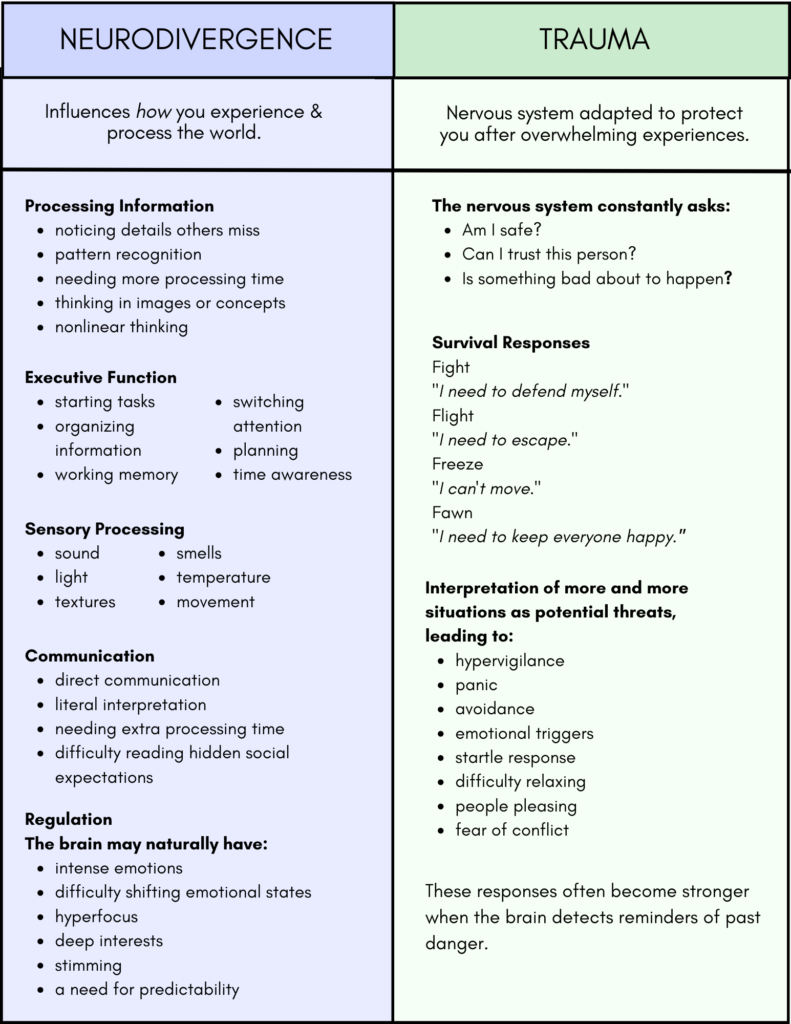
What Is Neurodivergence?
Neurodivergence refers to natural variations in how the brain develops and processes information.
Rather than being something someone “develops” after a difficult experience, these patterns are generally present throughout life, even if they aren’t recognized until adulthood.
Neurodivergence can influence:
- the way information is processed
- executive functioning
- sensory processing
- communication and social relationships
- emotion regulation
Importantly, these traits often remain present even during periods of relative safety and stability.
What is Trauma?
Trauma is not simply something bad that happened. Trauma describes how overwhelming experiences affect the brain and nervous system. When experiences exceed our ability to cope, the nervous system adapts to prioritize survival. These adaptations can continue long after the original danger has passed.
Common trauma-related patterns include:
- hypervigilance
- emotional triggers
- panic
- avoidance
- fear of conflict
- people pleasing
- difficulty trusting others
- feeling constantly “on guard”
These are not signs of weakness. They are signs of a nervous system that learned to protect itself.
The Same Experience Can Have Different Causes
One of the biggest misconceptions is assuming that the same behavior always has the same explanation.
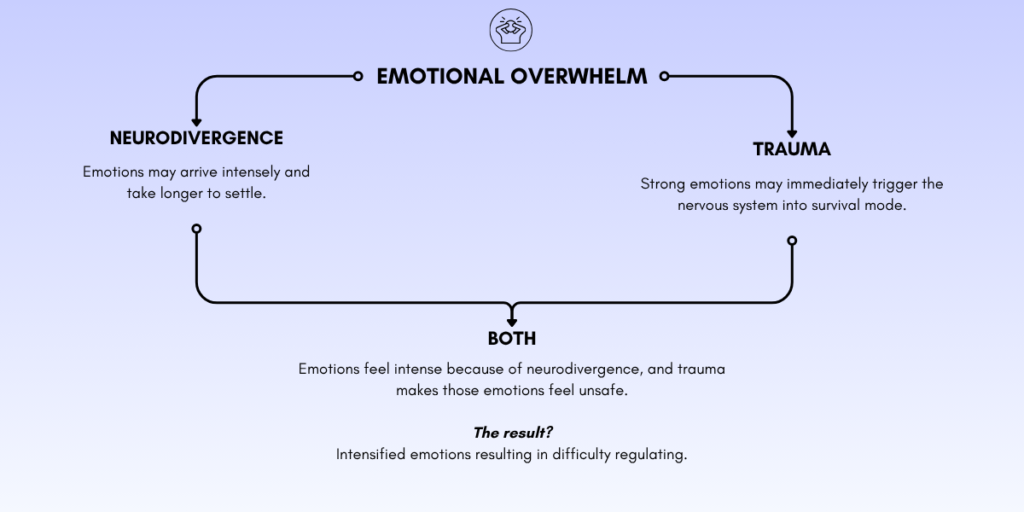
In reality, similar behaviors can arise through very different pathways.
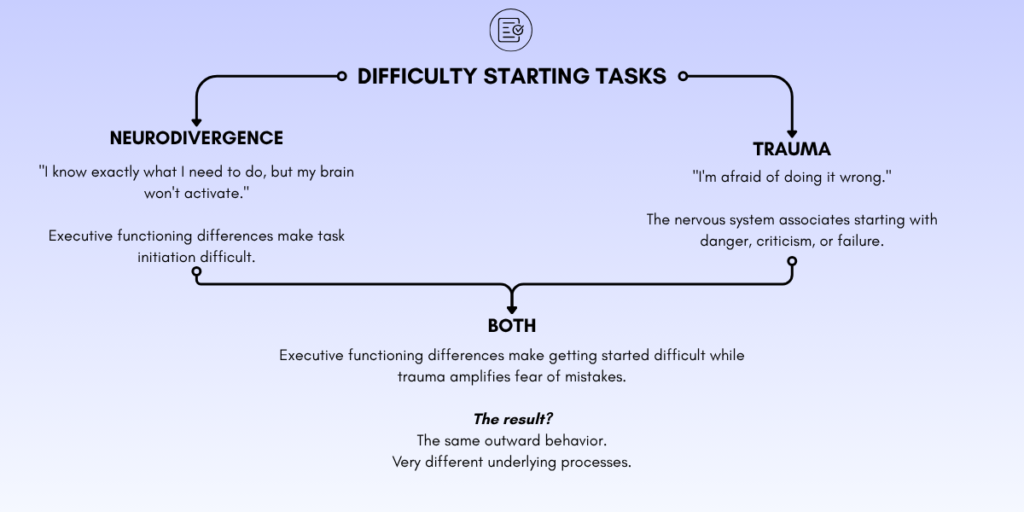
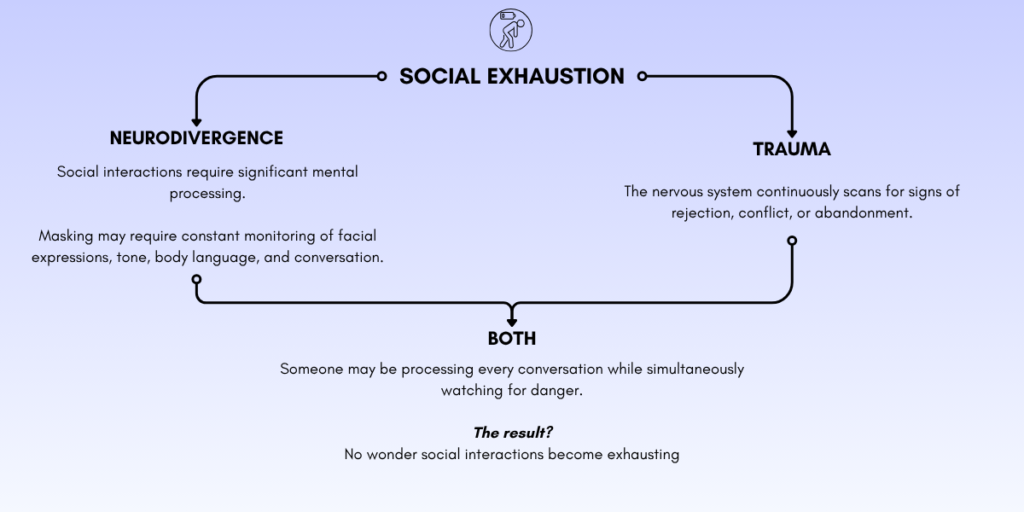
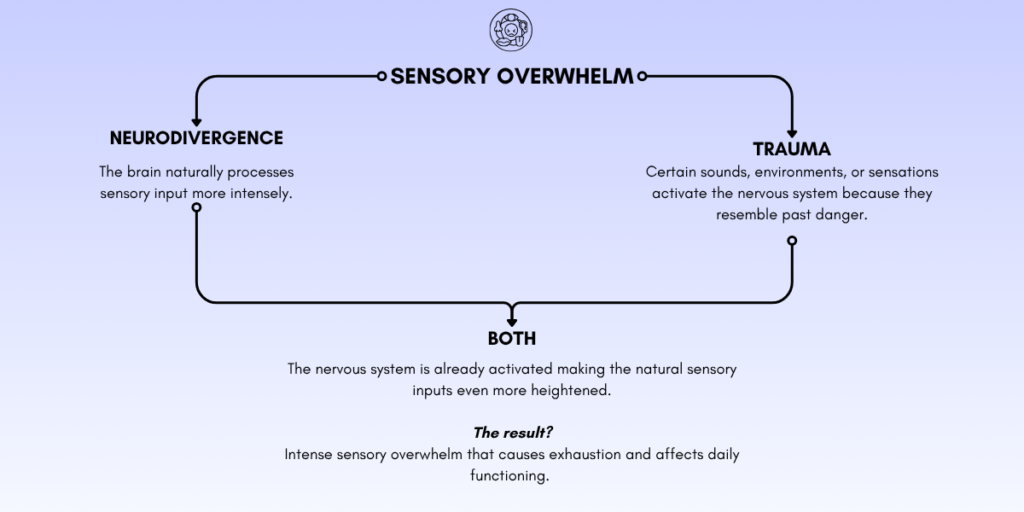
What Experiences Tend to Suggest Neurodivergence?
Although everyone’s experience is different, patterns that may point toward neurodivergence include:
- lifelong sensory differences
- always feeling “different”
- childhood executive functioning struggles
- deep or specialized interests
- needing routines
- stimming
- lifelong communication differences
- consistent patterns across many environments
Many adults don’t recognize these patterns until later in life because they learned to mask or compensate.
What Experiences Tend to Suggest Trauma?
Patterns that often suggest trauma include:
- symptoms developing after overwhelming experiences
- fear-based reactions
- emotional triggers connected to reminders of the past
- hypervigilancestartle responses
- avoidanc
- esurvival behaviors such as fight, flight, freeze, or fawn
- symptoms that fluctuate depending on how safe someone feels
What If It’s Both?
For many people, the answer isn’t one or the other. It’s both. Neurodivergence does not automatically cause trauma. However, growing up in environments that misunderstand, invalidate, or fail to accommodate neurodivergent needs can create chronic stress. Repeated bullying, rejection, punishment, masking, unmet needs, and feeling fundamentally misunderstood may become traumatic. Trauma, in turn, can make executive functioning, emotional regulation, sensory tolerance, and daily functioning even more difficult. The two systems begin interacting.
How Trauma and Neurodivergence Can Reinforce One Another
Imagine this cycle:
Neurodivergent differences require more effort to navigate everyday environments.
⬇
More effort can lead to chronic stress, particularly in environments that lack understanding or support.
⬇
Chronic stress and traumatic experiences increase nervous system activation.
⬇
When the nervous system is constantly working to keep you safe, everyday life requires even more energy.
⬇
Executive functioning, sensory tolerance, emotional regulation, and overall capacity become harder to maintain.
⬇
Life feels increasingly overwhelming.
The cycle continues until something interrupts it.
The Good News: The Cycle Can Be Interrupted
Support doesn’t necessarily change how your brain is wired. Instead, it changes how much unnecessary energy your brain and nervous system must spend surviving.
That interruption may come through:
- understanding your neurotype
- trauma-informed therapy
- accommodations
- reducing unnecessary masking
- healthier relationships
- nervous system regulation
- sensory support
- sself-compassion
Healing often means making life require less survival.
Rather than asking:
“Is this trauma or neurodivergence?”
Try asking:
- When do I first remember experiencing this?
- Does this happen even when I feel completely safe?
- What seems to make it worse?
- What seems to make it better?
- If fear disappeared, would this experience still exist?
- If sensory demands were reduced, would my anxiety also decrease?
These questions won’t provide a diagnosis—but they may reveal meaningful patterns worth exploring with a qualified professional.
The Goal Isn’t Choosing One Explanation
Many people spend years trying to decide whether they are “really autistic,” “just traumatized,” “actually ADHD,” or “simply anxious.” But human experiences are rarely that tidy.
Your brain and your nervous system are constantly interacting. Understanding your experiences isn’t about finding a single label. It’s about understanding what your brain needs, what your nervous system needs, and what allows both to feel supported. Whether your experiences stem from neurodivergence, trauma, or a combination of both, they are real. And understanding the why behind your experiences is often the first step toward responding to yourself with greater curiosity, compassion, and confidence.